

This post is brought to you by my book Conscious Accomplishment - How to Use Personal Achievement for Spiritual Growth (4.9 ⭐️ on Amazon).

“I was in constant pain for 25 years and this cured it.”
This was the hook that started my journey in the fascinating and powerful world of John Barnes Myofascial Release.
How I got here began with a stroke of fate.
I was walking out of an EESystem center in Florida, when I literally bumped into the guy walking out of the office next door.
There was a sign on his door that said “Myofascial Release.”
I was familiar with myofascial release from my CrossFit days when I used to do RomWOD (workout of the day) and Kelly Starrett’s MobilityWOD.
We got to chatting and he proceeded to tell me his story of being in chronic pain for 25 years, trying everything, and finally healing himself through John Barnes Myofascial Release.
Having been in chronic pain for years, I was intrigued and booked a session…
It ended up being way different than I expected.
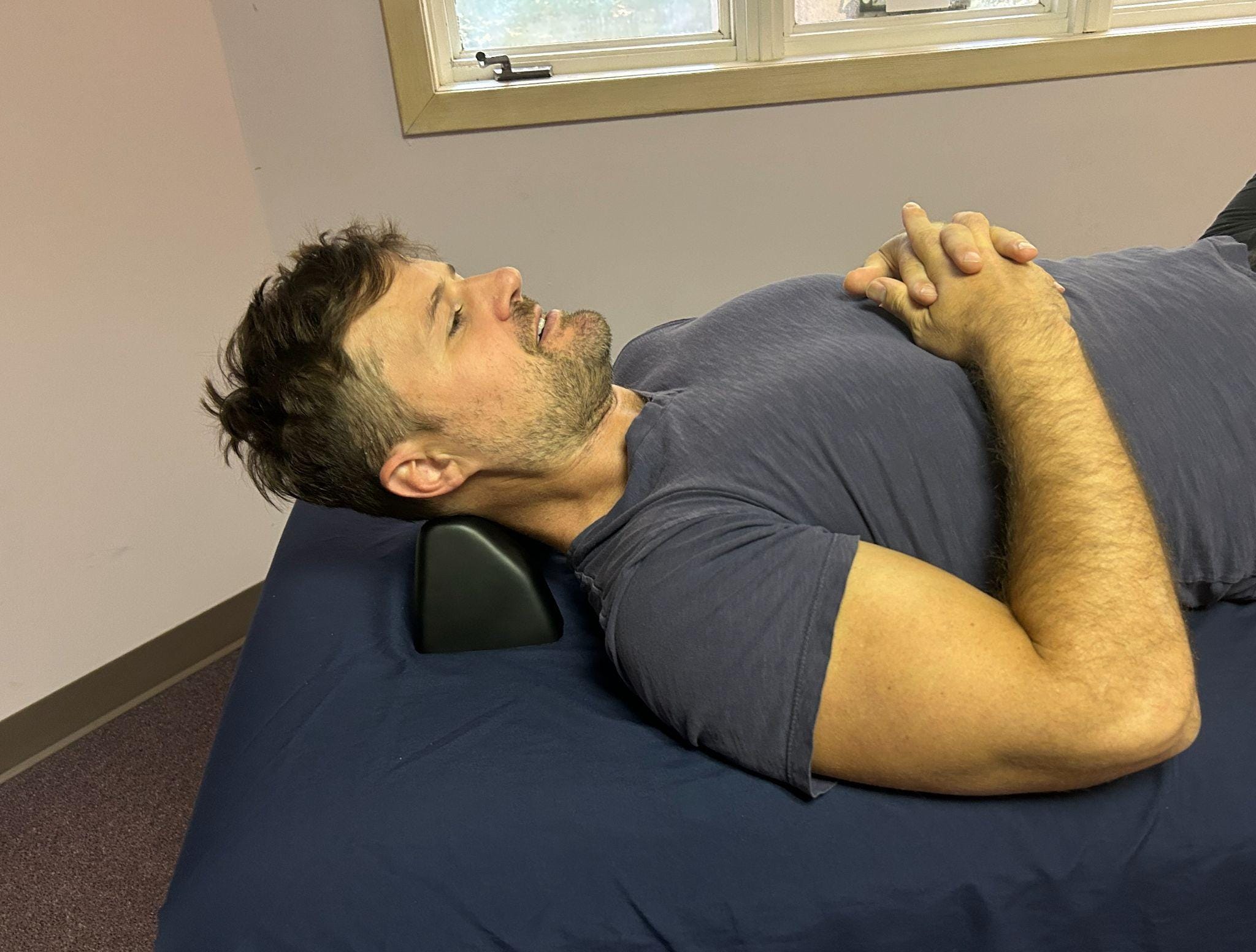
Instead of some intense bodywork experience like deep tissue massage, all he did was apply gentle pressure for prolonged periods of time on a few different parts of my body. As he did this, all kinds of emotions and memories that had been buried in my subconscious started floating to the surface. At times, it felt like I was on a psychedelic journey.
The whole experience was so fascinating to me.
I had spent years going inward through meditation and somatics to observe what was happening in my body. This felt like the opposite. During myofascial release, my body was being played like an instrument to stimulate the hidden contents of my inner world…
This was clearly very different from simply another way to work on mobility. I was hooked.
This first experience was over a year and a half ago. Since then I’ve been working with an incredible therapist here in Austin and just completed a two-week intensive treatment at one of John Barnes’ main clinics, “The Sanctuary” in Malvern, Pennsylvania. This was an incredible experience, and I’ll share more details on it later in the article.
I’ve explored a vast number of healing modalities in the past 6 years and I feel that John Barnes Myofascial Release is one of the most effective, under the radar modalities out there right now. I also believe the fascia system is a massive key to the mind-body connection and our health that has been largely ignored, which is why I wanted to write this post.
The Missing Link in the Mind-Body Connection?
One of the first books I read on my consciousness journey was The Body Keeps the Score by Bessel van der Kolk. I loved every minute of it, but I remember thinking: where does “the score” actually exist in our bodies?
Van der Kolk explains it through the brain’s alarm system, stress hormones, and a nervous system that keeps signaling the muscles to brace long after the danger has passed.
His explanation is compelling, but it describes the alarm more than where the alarm gets stored. Nerve signals last milliseconds and stress hormones break down within hours, yet people carry the same bracing patterns for decades? I was a huge fan of the book’s overarching concept, but the details felt incomplete.
Through my direct experience and research, I now believe a big part of the answer is the fascia system.
Fascia is connective tissue that runs through the whole body as a three-dimensional web. Like a spider web, it extends from head to foot without interruption and supports, protects and wraps every muscle, bone, nerve, organ and blood vessel, all the way down to the cellular level.
It’s also one of the body’s richest sensory organs, packed with nerve endings that feed our sense of our inner state called interoception.
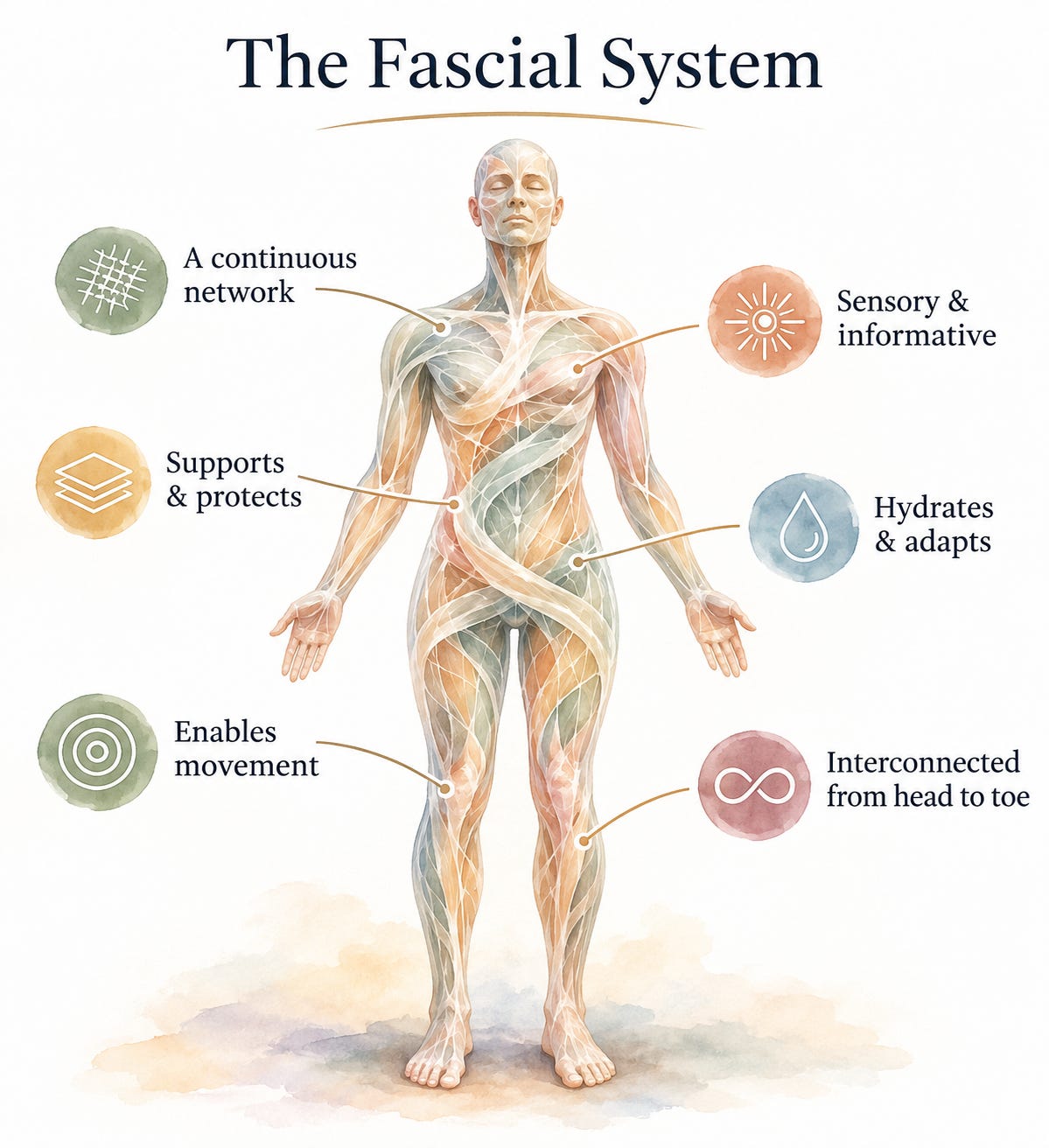
Despite the fact that our fascia system literally encapsulates everything, it’s largely absent from allopathic medicine because fascial restrictions don’t show up well on standard imaging like X-rays and routine MRIs! As a result, so many people who’ve dealt with mystery chronic pain like myself are shipped off to physical therapy and chiropractors, with underwhelming results.
Only in the past couple of decades has fascia research really taken off. One study found that people with chronic low back pain had about 25% thicker fascial connective tissue in their lower backs than people without it. Researchers have also discovered that fascia contains cells that can contract on their own, independent of nerve commands. So the popular idea that fascia is just a passive wrapper following orders from the brain isn’t really accurate. That may be why calming the nervous system through talk therapy, medication, or meditation can often leave the body’s holding patterns untouched.
If the nervous system is the messenger, it seems like fascia may be where the message gets written down. And when we engage the fascia directly through gentle touch, we get to re-experience the message in our awareness, so that we can process and be free of it, instead of continuing to carry it around.
I’m not alone in looking for where the score is kept. My friend Jonny Miller, in his incredible essay How to Unclench, points to the same gap, noting there is still “no established bodily mechanism for storing trauma.” The candidate he highlights, from neuroscientist Mike Johnson, is a “latch” in the smooth muscle of our blood vessels that can lock in place for months or even decades. Since fascia and those blood vessels are woven together, I suspect we’re describing two sides of the same phenomenon.
There’s emerging science pointing in this direction too. Researchers have found that in mice, the gel-like matrix surrounding neurons in the brain’s fear center is what locks fear memories in place and makes them resistant to erasure. That matrix belongs to the same family of material as the fascia’s ground substance. Was John Barnes on the money when he stated that our memories and emotions are “embedded within the myofascial system?” My direct experience seems to corroborate it.
The John Barnes Approach
John Barnes was a physical therapist who developed his approach over 50 years of treating himself after a severe back injury, directly treating patients, and training over 100,000 therapists in his methodology.
According to Barnes, the fascia contains a gel-like ground substance which is the body’s main route for carrying oxygen, nutrients, hormones, information and energy in and toxins out. The fascia continues inside the cells forming one continuous living web and communication network. The fascia is piezoelectric and collagen acts like a semiconductor, which makes the fascia function like an electronic network. He believes that communication through this network occurs through frequencies of light, carried via the ground substance and microtubules, and that the brain and nerves are “a slower and secondary communication system.”
Research offers partial support for this picture. Ning Wang and colleagues found that force applied through integrins (the anchor points that tie a cell to the tissue around it) activated signaling deep inside a cell in under a third of a second, while a chemical growth factor produced no response within 12 seconds. This suggests that mechanical signals carried through the connected fascial web may travel much faster than chemical ones.
Healthy vs. Unhealthy Fascia
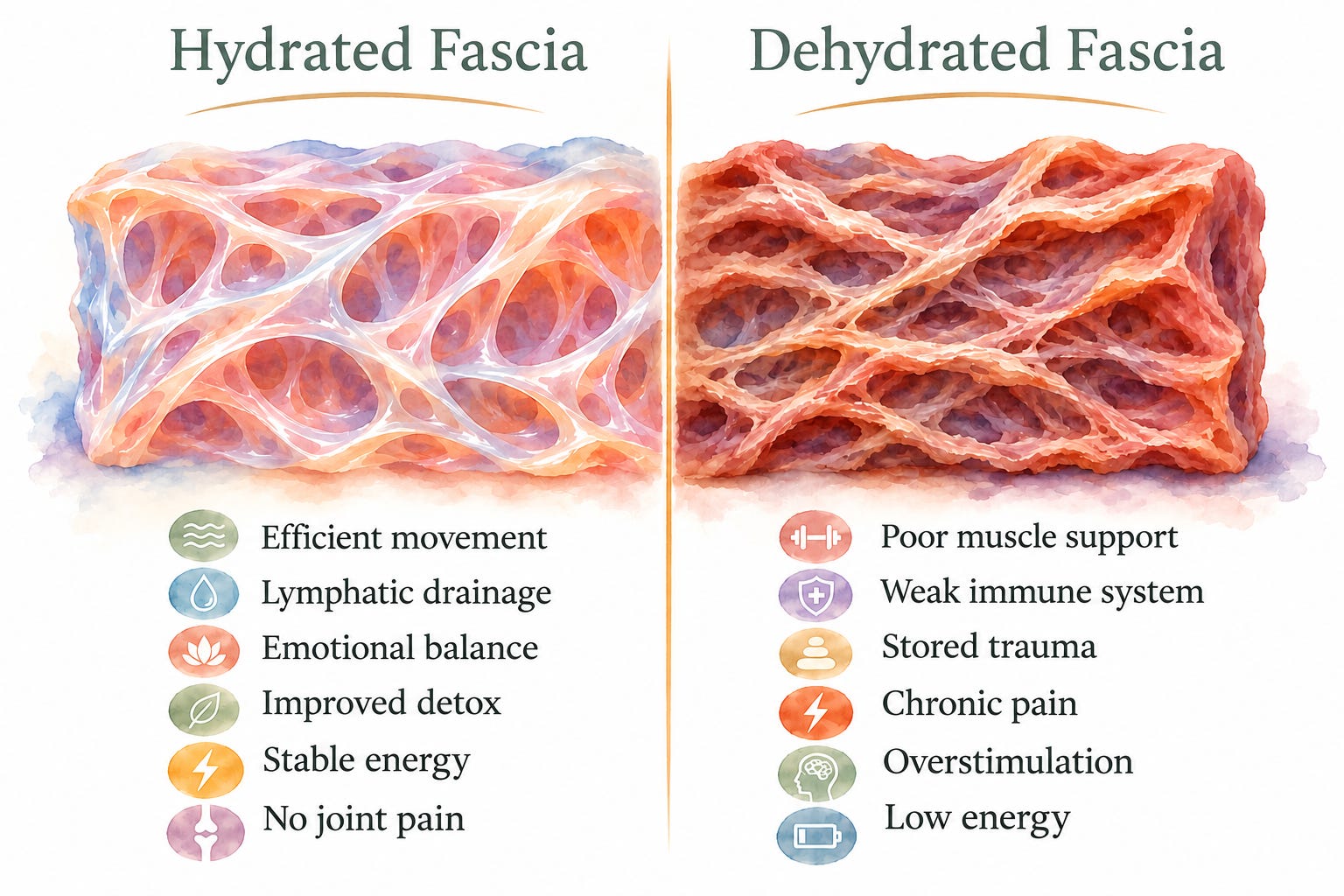
In a healthy state, the fascia’s ground substance is hydrated and gel-like, and the collagen fibers glide over one another. According to Barnes, this allows the body’s subtle energy, light and vibratory information to move through the ground substance freely so that trillions of cells can act together in a coordinated way, far faster than nerves could manage.
To ground this a bit, imagine a plastic bag of freshly cooked spaghetti with a little oil in it. Move the bag around and the strands slide easily over each other. But if you leave it open on the counter for a day or two, the strands dry out and stick together wherever they cross, making the whole bag stiff. Healthy fascia is like fresh spaghetti, while unhealthy fascia is like stale leftovers.
Fascia can become restricted through physical and emotional trauma. When it does, it becomes shortened and hardened. Physical trauma can include everything from direct blows to the body, to surgery and inflammation.
Barnes believes the mind-body is a hologram, and that trauma changes the frequency of the energy moving through it. That change dehydrates the ground substance, which causes it to shift from a fluid gel toward a more solid, glue-like state.
When we’re hurt, physically or emotionally, we pull our awareness out of that part of the body so it doesn’t hurt as much. Without our attention flowing through it, the ground substance starts to dry out and harden. In his view, most people with fascial restrictions are partly “out of their body,” which is why treatment asks you to bring your awareness back into the area through feeling, not thinking.
When your fascia is restricted, there are downstream effects across multiple systems. Communication across this living matrix breaks down, cells are cut off, intense pressure builds in our bodies, and our emotions and memories are frozen in place. This triggers the unconscious formation of protective bracing patterns that we start to live in without knowing.
Why the Body Holds On
Barnes draws on Peter Levine’s work on the freeze response to explain why these patterns get stuck. When an animal survives a threat, it shakes, sweats, and breathes deeply to discharge the energy, then returns to calm. Humans rarely let that cycle finish. We hold it in out of fear or because we were taught not to feel, and the unfinished response gets locked into the tissue. Willpower can’t release it, because it lives below our conscious control.
Barnes also offers an explanation for how specific memories get stored. You’ve probably experienced how a certain smell or song can bring back a past moment so vividly it feels like it’s happening now. Barnes extends this “state-dependent memory” to include the body’s position. During trauma, the body records the experience below conscious awareness as a form of protection, and that record is tied to the shape the body was in at the time. Day to day, we unconsciously avoid those positions because of their association with pain, fear, or other emotions we’re trying to avoid. When a therapist gently supports the body spontaneously moving back into one of these positions, the memory, the emotion, and the belief formed in that moment can rise to the surface, so that it is fully processed and healed.
The same thing happens with the postures we live in every day. Picture a kid growing up in a volatile household who learns to literally shrink so they won’t be noticed. Decades later their back hurts, and when they try to stand up straight it brings up not just pain but a sense of dread or shame, because standing up for themselves once felt dangerous. Or think of the person carrying “the weight of the world” who lives with a permanently tight neck and shoulders. The posture is holding the belief in place.
In my own sessions, I’ve had crazy experiences where gentle touch will instigate my body moving spontaneously into unfamiliar positions that I’m not actively directing. Often this is accompanied by imagery, memories, and emotional content. Some examples include my body spontaneously moving into the fetal position like being in the womb, my arms moving above my head with my hands together like I was chained up, and even my body making the motion of running away from something while hyperventilating as the words “I’m free, I’m free” cycle in my awareness over and over again. Some of these experiences feel more powerful and cathartic than plant medicine experiences I’ve had.
The Myofascial Release Process
The beauty of John Barnes Myofascial Release is how simple it is. It doesn’t require fancy technology or even cost money if you do self treatment (highly reccomend this book).
To unblock the restricted fascia, it just requires gentle, sustained pressure on a tight area of the body or stretch for 3 to 5 minutes. This is the core technique. After the first minute or two, the tissue will begin to soften, which you can really feel. My therapists have always recommended going for 5 minutes for a deeper release. Minutes 3-5 is often when memories, emotions, and sensations move from obscurity into awareness.
This is what separates John Barnes approach from the stretching I did in my CrossFit days. A typical stretch is held for 10 to 30 seconds, which only reaches the elastic fibers in the fascia, so the results are temporary. Most chronic tightness lives in the denser collagen fibers and the dried-out ground substance, and those don’t even start to engage until around 90 to 120 seconds. Releasing multiple layers takes about 5 minutes which is how long it takes for the stuck points between fibers to let go and for the ground substance to start drawing water back in.
You also don’t need someone pressing on you to do myofascial release. Sustained pressure is one way in, and active elongation is the other. Any stretch becomes a myofascial stretch when you follow three principles.
The first is time. Ideally you want to hold a stretch or pressure for at least 90 to 120 seconds, and ideally 5 minutes.
The second is telescoping. Instead of forcing past the point where your motion stops, you go to that point and gently lengthen. If your shoulder is tight, raise your arm until it stops, then reach your fingertips away from your body like a telescope extending, and hold that length while following any small movements your body wants to make as it lets go.
The third is presence. Keep your attention on the sensations and breathe into them. If you check out and start thinking about something else, you lose most of the benefit.
One of the things I love about John Barnes Myofascial Release is that it works on multiple levels. For comprehensive healing to occur, they believe the tissue, emotions, and belief at the time of physical or emotional trauma need to be released. For this to work well, the patient needs to participate fully by keeping their attention on the sensations and allowing whatever feelings or emotions come up to be there. If you just sit there and think about something else, you won’t get great results.
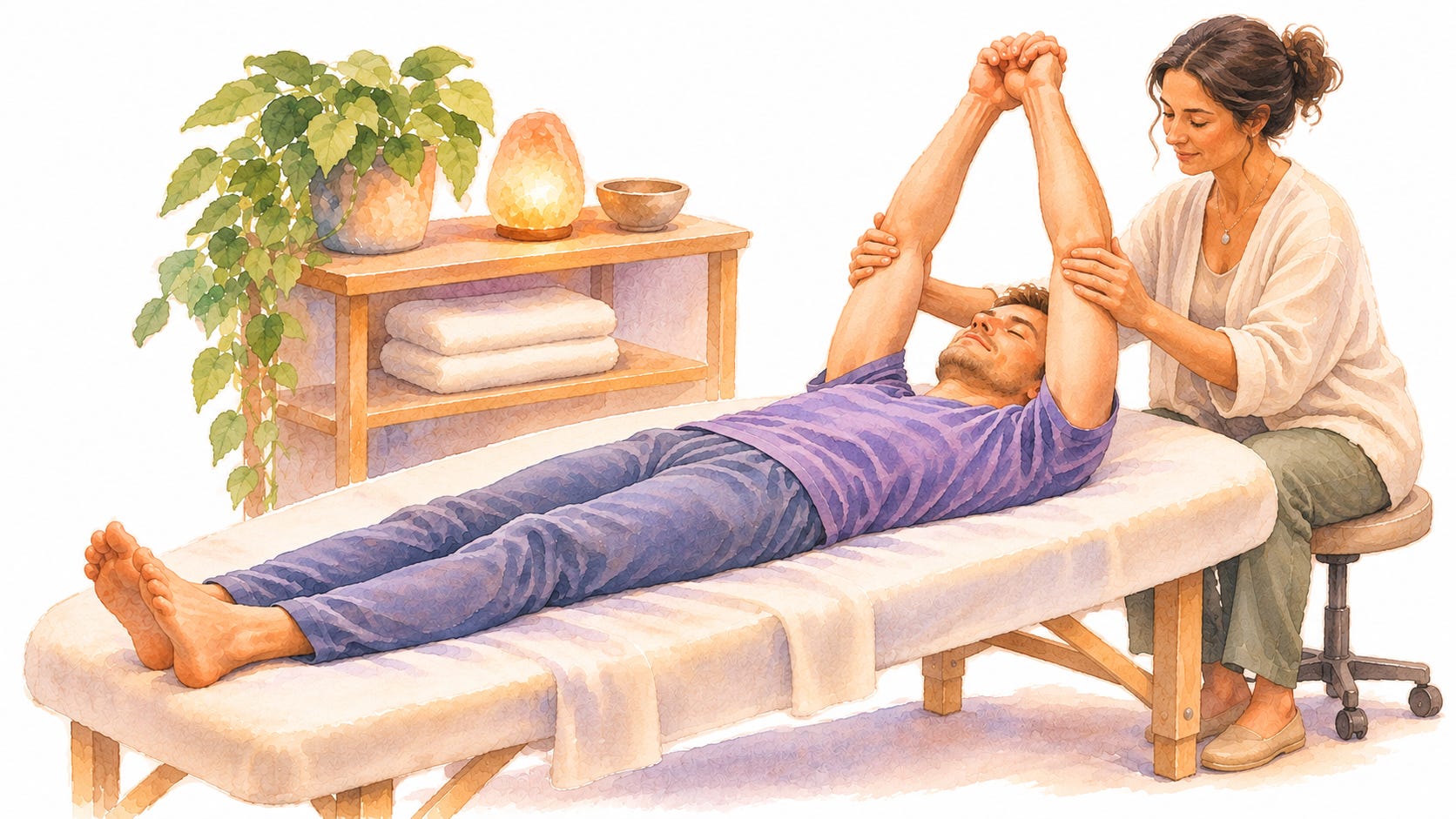
The other core technique is called unwinding. In unwinding, when the body starts to spontaneously move into positions, the therapist assists by gently lifting a limb or part of the body just enough to take gravity out of the system, and then waits. Once the body feels safe, it continues to move on its own, often into the exact positions where trauma is held. Barnes calls this phenomenon “the spontaneous movement of the body via the mind.” It feels nothing like voluntary movement. It’s more like floating, or being moved, and truly reveals just how intelligent our bodies are.
Unwinding is something you can do on your own, standing, sitting or lying down. Reach your arms out, lengthen through your spine, slow your breathing, and feel for the subtle motion inside the stretch. Then follow it without deciding where it should go. Kids unwind naturally, twisting into all kinds of strange positions while they play, until we teach them to sit still. At times the movement will stop on its own in a particular position. Barnes calls these still points, and they’re often where a memory is stored. Several of the experiences I described earlier were examples of reaching a still point.
This incorporation of the psycho-emotional, alongside the longer holds, is really where I feel like there’s a big difference between John’s method and many “fascial release” methods focused on mobility. Working on all levels is also why his methodology seems to work so well for people with chronic illness and pain.
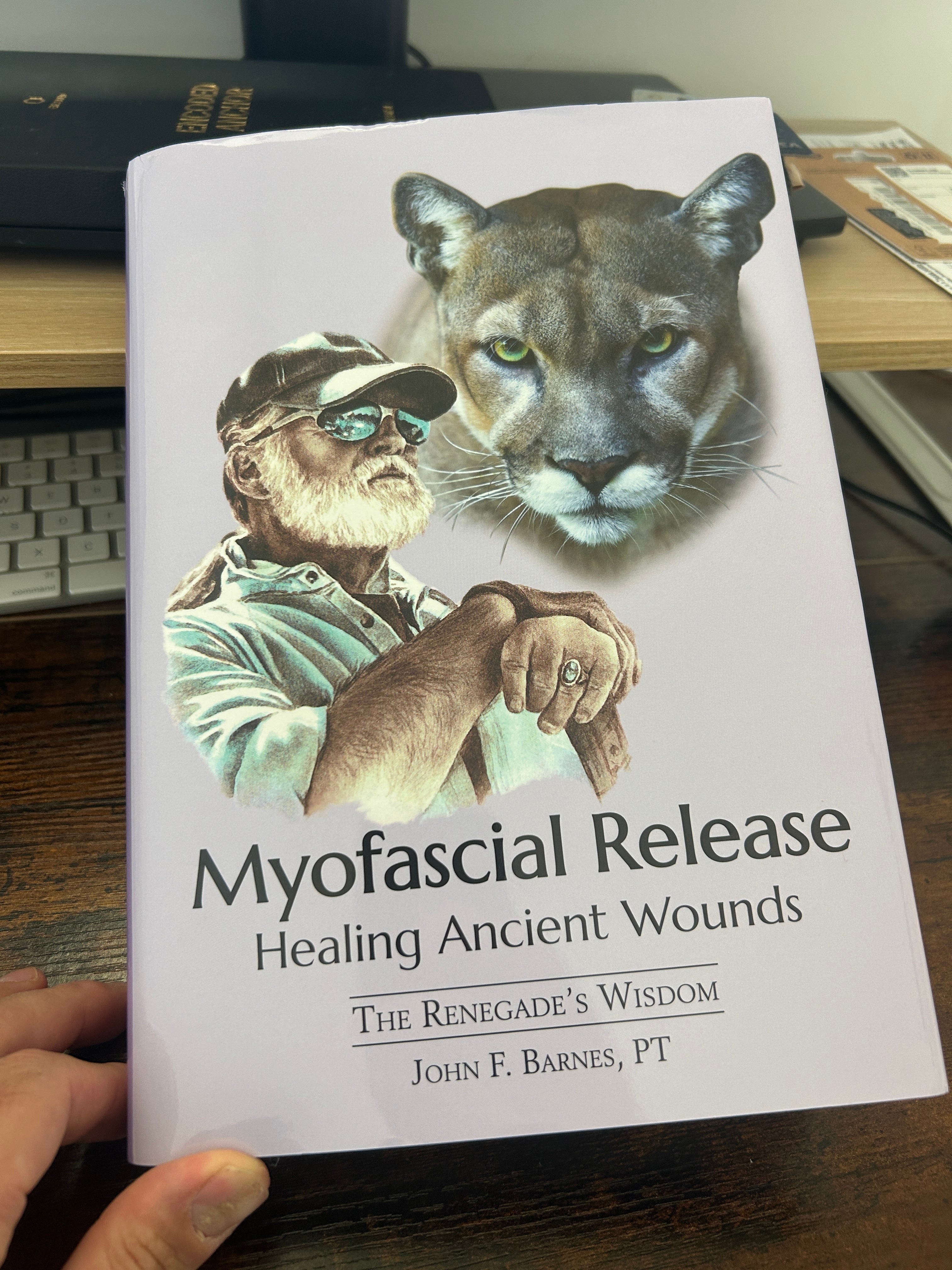
In his book, he talks about how tissue that’s stretched tends to let go temporarily and then pull back if the other layers aren’t addressed. Understanding an old wound intellectually isn’t enough either. As he puts it, many patients say “I thought I’d already dealt with that,” and they had, but only in their heads. Resolution only comes when the emotions tied to an event are actually felt and released.
Then there’s the belief or interpretation we formed at the time of the trauma. When that message surfaces, the person can choose to change it. If the belief stays in place, Barnes says the consciousness will eventually pull them back into dysfunction. This matches my own experience that consciousness is primary in healing. If you heal a complex issue physically, and don’t address the underlying consciousness that caused the issue, you just become ill again.
One of the reasons I love myofascial release is it seems to approach the massive heap of hidden material in the subconscious from a completely different angle. I’ve encountered countless wounds that somehow eluded me in all the other inner work I’ve done. Maybe they would have eventually come into awareness through some other channel. I don’t know. I’m just amazed how gentle touch can create such a portal to the subconscious through this methodology.
One of the other things I love is how satisfying it feels to observe the correlation between emotional processing and shifts in our physicality. A lot of mind-body methodologies work consciousness first. For example, if you have a pain in your throat, someone might ask you to explore what you’re not saying or what you haven’t said. Usually the patient explores these things and then hopes that one day they wake up and the pain is gone. It’s great when this happens, but the feedback loop is mysterious and slow.
Myofascial release starts with the body first. This makes observing the connection between physical impingement and inner material much tighter. You literally feel your body open while experiencing inner content, and then you walk away with a different body. I find this deeply satisfying.
My Sanctuary Experience
As mentioned earlier, I had been working with a therapist on a weekly basis for a year and a half. I made a lot of progress, but it was slower than I wanted. I finally decided to take the plunge and go to one of their two centers after reading John’s book Myofascial Release, Healing Ancient Wounds: The Renegade’s Wisdom. Mostly because the healing stories were so incredible and inspiring.
During an intensive, you’re doing 15+ hours of treatment a week (roughly 3 sessions 5 days a week) for at least two weeks. The thought behind the intensive is that the body doesn’t have a chance to revert back to its normal bracing patterns with this level of intensity and consistency. It’s often why people have such big breakthroughs after doing an intensive.
I went with the hopes of miraculously curing the chronic pain I’ve been dealing with for 5+ years, and the first thing they said to me was that the intensive was “the beginning.” It took decades (and lifetimes) for my body to accumulate all this trauma and that two weeks was more like a jumpstart for me to continue on my healing journey.
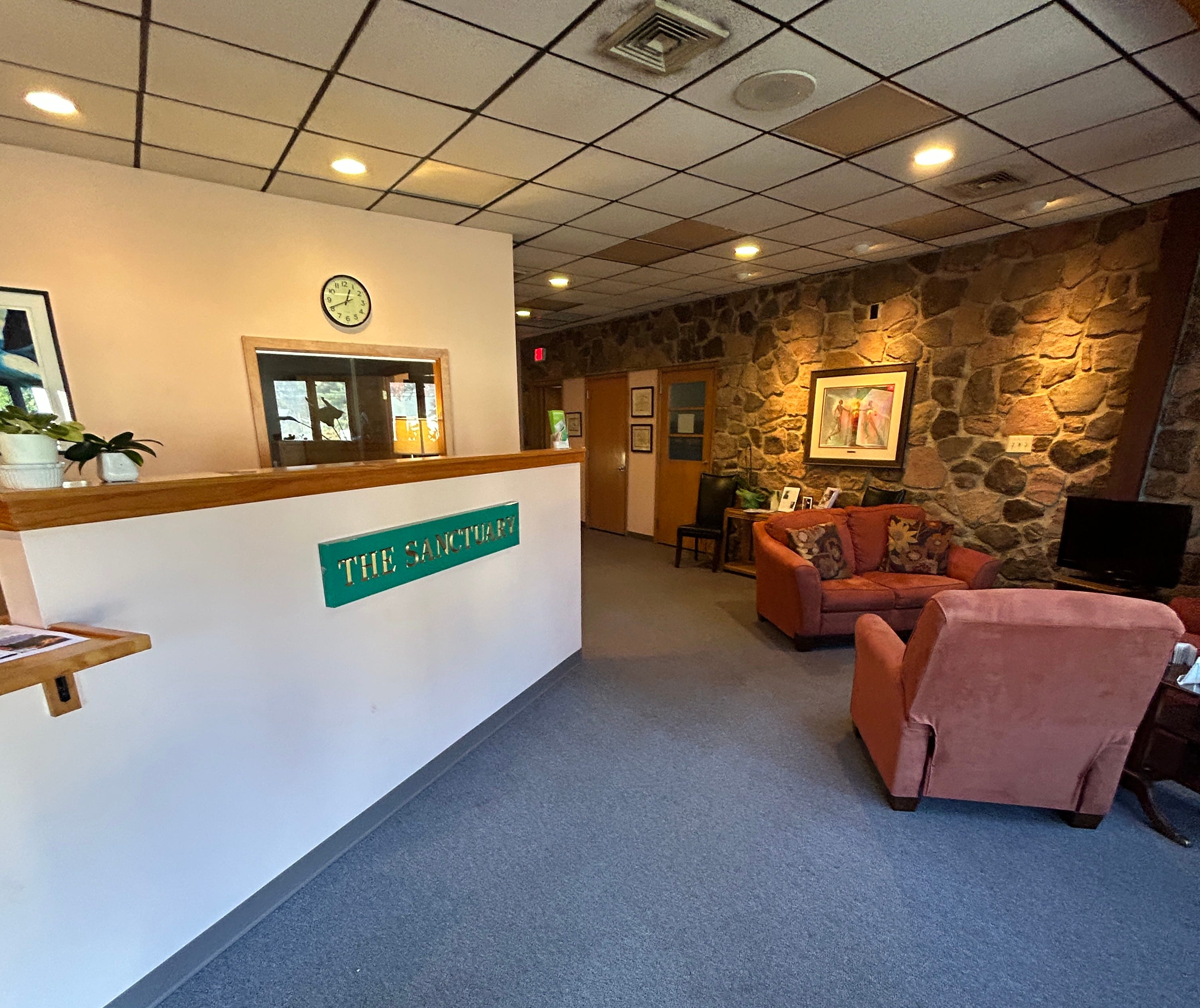
Overall, the experience was incredible. The therapists were top notch, I learned a ton, and I left in much less pain than when I came. My body also feels so much more spacious than before.
I processed a TON of emotions, but there weren’t any cataclysmic insights or releases like I thought might happen. Honestly this was fine for me. I feel like I’ve been through so much and was grateful to walk away without any new upendings!
In a perfect world, there’d be a way to measure the suppressed trauma bank to verify the efficacy of my treatment beyond feeling better. But we’re just not there yet. So they do a mobility assessment before and after, on how freely your joints move without forcing them. Think like how high you can lift your arm or turn your head. Here were my results:
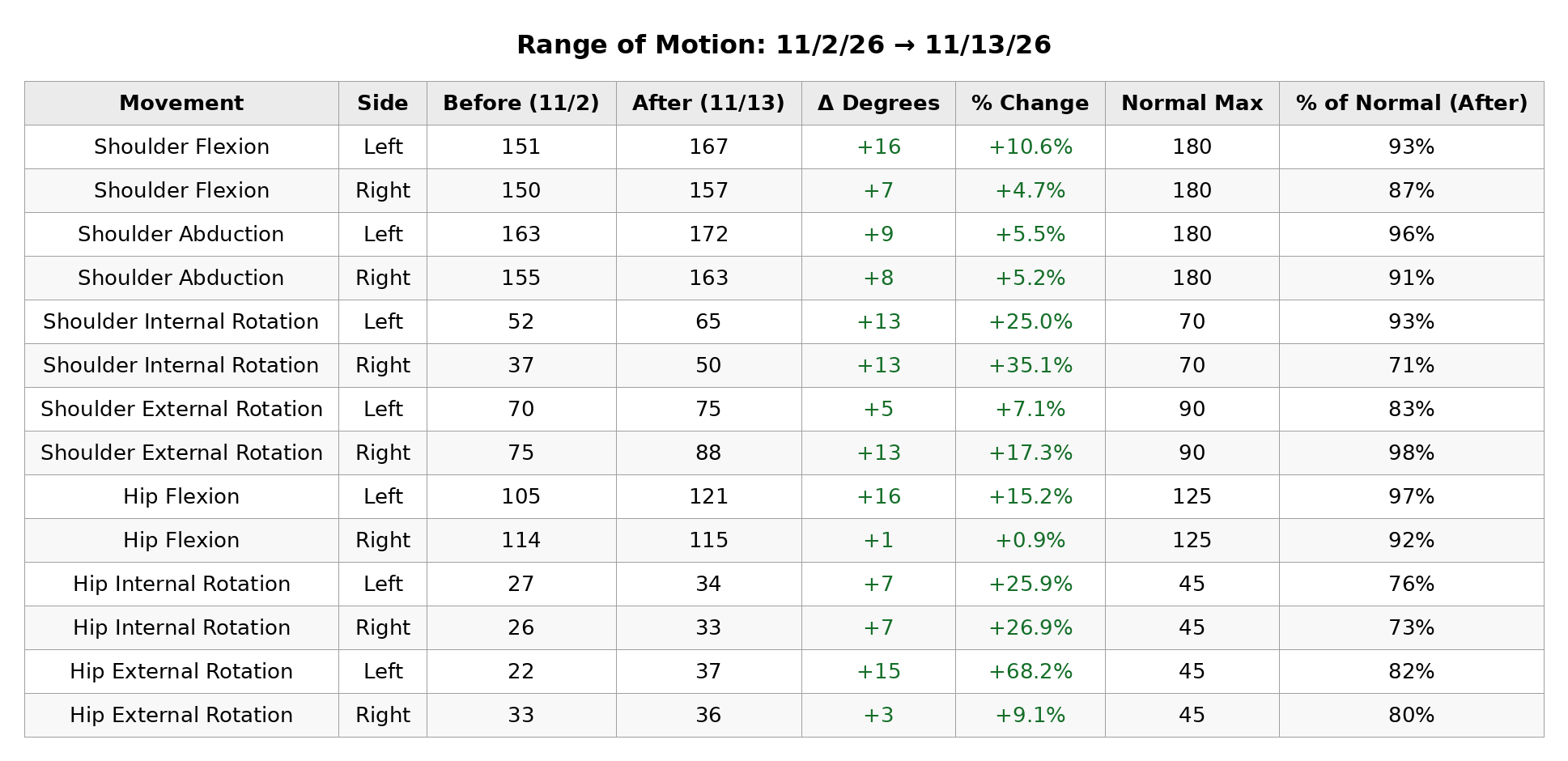
These numbers might not seem astronomical, but you can imagine that a 10 degree difference in how much you can lift your arm or move your hips is a pretty big deal over the course of your life.
My plan going forward is to keep the momentum up from the retreat by doing self treatment each day and increasing the frequency I see my therapist from once a week to 2-3x a week.
Where This Leaves Things
I’m extremely bullish on the fascia system becoming a more important part of our understanding of the human body and mind-body connection. Between my direct experience, hundreds of thousands of patient success stories, and the emerging science, it seems like it could be the missing physical link between consciousness and the body, that we intuitively know exists, but don’t quite fully comprehend.
If you want to learn more, I highly recommend John’s book Healing Ancient Wounds and also finding a therapist in your area.
I love this and I'm very much in favor of the mind body perspective (I conducted successful research showing that mindfulness practiced with a specific kind of cognitive shift can lead to significant reductions in physical pain)
having said that, sometimes the fascia just react to excess stress. I stopped jogging in my early 60s due to knee pain, but somehow, with working out (and perhaps deeper meditation, who knows) it went away and I started running again. Boy did I love it.
However, after about 6 months I started to get that "there must be socks bunched up in my sneakers" feeling, and it turns out it was the fascia. So I stopped again. Well, now at 74, I was just really eager to try running again, and my physical therapist insisted i could do it.
I started running 45-60' (!!!!!) and within a week, i have what feels like a small lump on the ball of my left foot (you can't feel anything when you put your hand on the foot). It actually gets better each day that I don't do the running.
So I think it's helpful to keep this in mind. i have such faith in paranormal science that I actually believe, in theory, that even broken bones could be healed by consciousness alone.
But I'm not there. So for now, I'm doing rebounding and bike riding until the foot heals!
Thanks for the in-depth research and for sharing your journey, Scott. I think this might be quite helpful for me with my own body work. It's great to see you back in action. I hope fatherhood is treating you well and wishing you ease and relaxation as you heal the chronic pain! <3