

This newsletter is sponsored by Conscious Talent - where companies and leaders who value both professional excellence and inner work connect to build transformative businesses.

I feel like I’m hearing the words “high agency” and “agentic” constantly these days. This is particularly true amongst the startup tech crowd.
My perspective on this has evolved over the years.
Let’s start with what high agency means:
the capacity to move a situation toward a desired outcome a.k.a. make shit happen.
As someone once obsessed with being high agency before this idea was branded by the X crowd, I think we’re largely missing the forest through the trees.
Developing agency is useful, but there is a bigger game you can play. It’s working on the context you apply agency from, which simultaneously increases agency.
Playing The Game Vs. Understanding The One You Have Constructed
Once upon a time, I was a high agency startup bro.
I was extremely confident that I could figure out any task that needed to get done and would just do it. I was obsessed with productivity systems, tools, and creating leverage to get ahead any way I could.
My sense of agency was one-dimensional in that it solely focused on working with my ability to wield external factors like my skills, social capital, and resources ($$).
The deeper I went on my consciousness path, the more I realized the limitations of looking at agency this way.
Although I spent years forging all these assets that seemingly increased my capacity to shape my material world, I was always applying my agency from a place of ignorance.
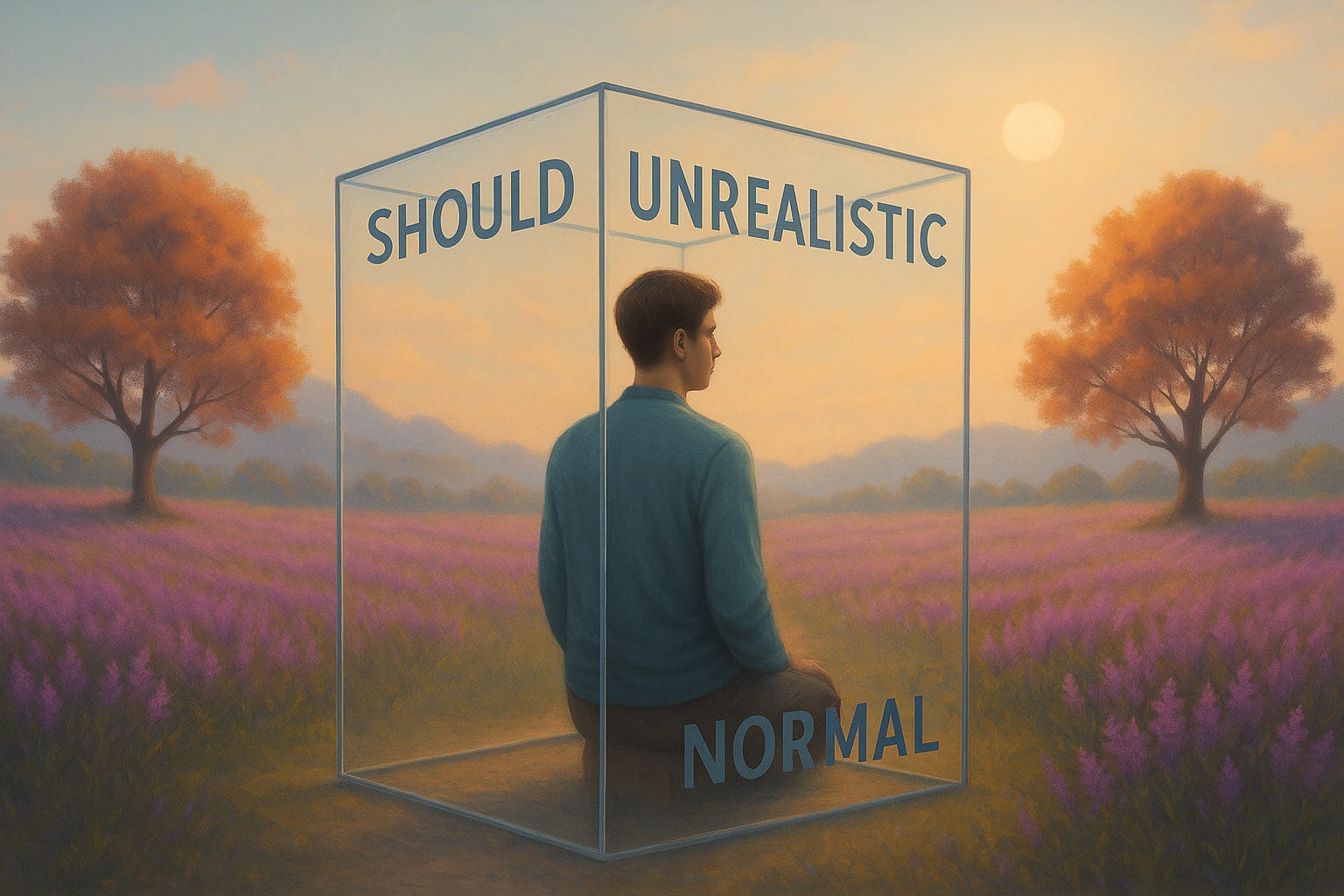
Specifically, my model of reality had been based on a set of ideas that I inherited from the outside world. They reflected what I was exposed to, more than fundamental truths. These patterned ways of perceiving things created an invisible box around me by defining my sense of possibility and way of approaching things.
So all this focus on developing agency, really just made me better maneuvering within an invisible box that I didn’t even know I was in.
Let me give you a concrete example. In my early and mid-twenties I was obsessed with networking to get ahead. I was constantly taking people out for coffee, trying to insert myself in the right rooms, and grow my online audience to become an opportunity magnet. These activities seemingly created results, which motivated me to improve my capacity for the game I was playing. I met more interesting people, got in better rooms, and developed more online clout.
These developments created some positive outcomes in my life, but the process also exhausting. The challenge was that my box told this is how the world worked. Because I didn’t see any other way, I just kept cycling trying to play the same game at higher levels.
This is the crux of where I see most people missing the forest from the trees when it comes to “developing agency.”
They focus on becoming better at playing games in the invisible box they’re in, instead of working on seeing the boundaries of the box in order to redefine them.
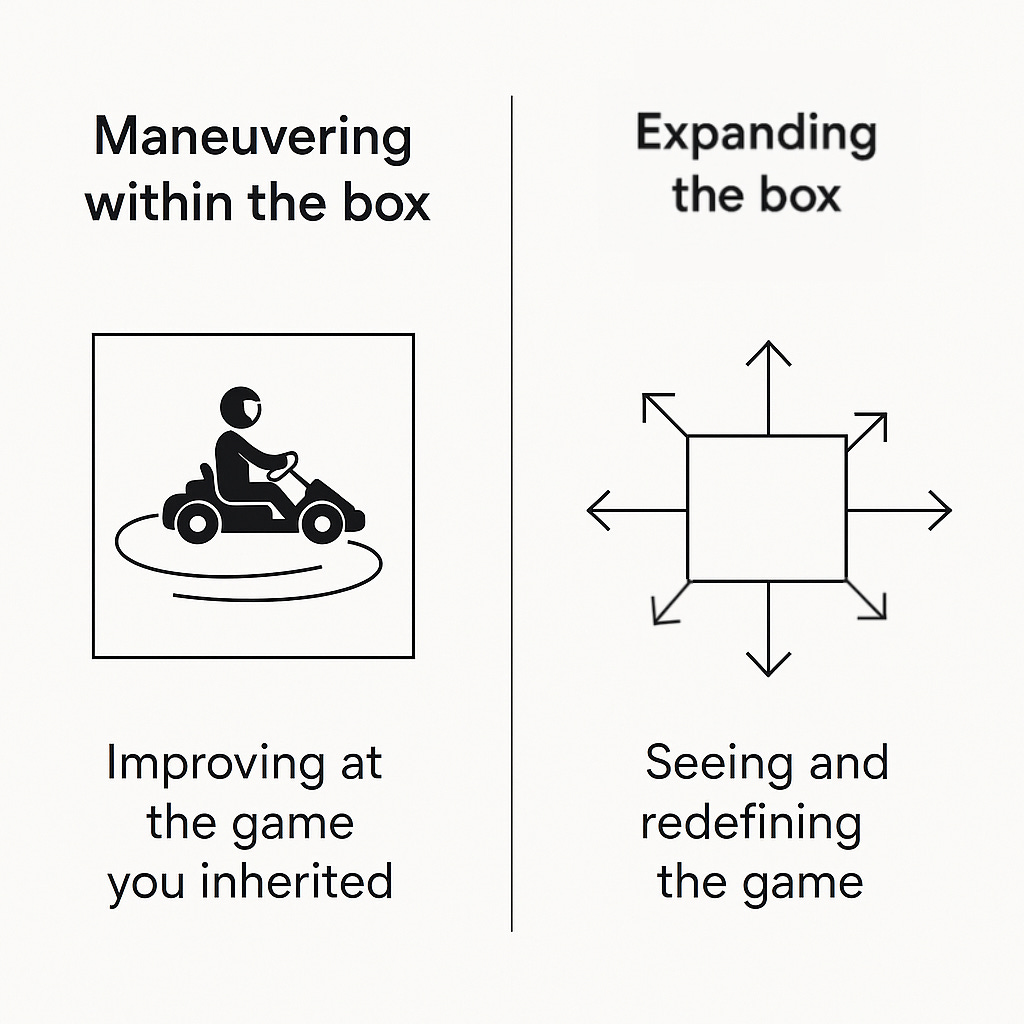
In this example, the walls of my box were defined by a set of beliefs embedded in my consciousness:
It’s all up to me to go out and make meaningful connections happen
More effort equals better results
More connections equals more value
Are these true? They may be common ideas in the consensus narrative that is indicative of a certain level of understanding, but they’re far from absolute truths. This is just one form of a game that was played by the generations before us.
If you recognize there’s value in meeting the right people, what would an alternative game look like? How about:
I intersect with the right people as needed
I meet people through doing things I enjoy that don’t feel effortful
I only need a handful of people to support me to accomplish my goals and change the trajectory in my life
What is the difference between the two games?
It’s not how “agentic” someone is.
It’s the information and energy in your consciousness that we call beliefs. These constructs define the walls in which we apply agency.